


Manhattan’s Upper East Side, at least in the prime real estate areas, is chock-full of parks and greenery, but lacks a convenient subway line. Wall Street area residents, on the other hand, have great subway accessibility–but not much of anything else.
Such considerations of various Manhattan neighborhoods were recently set out in a survey by New York-based Bellmarc Brokerage. The analysis was done to find out why condo and co-op buyers choose to live where they do in the Big Apple.
The results were generated over a year’s time from Bellmarc’s computer data and by 250 of its brokers, who completed three blind surveys based on their impressions of city dwelling spots. The data will be updated annually and supplemented by quarterly analyses of asking and selling prices.
The survey breaks Manhattan into the six territories covered by Bellmarc’s brokerage branches: Eastside, Westside, Midtown, Lincoln Center, Gramercy/Chelsea and Downtown and divides these six areas into 41 neighborhoods. On a scale of one to ten, with ten being the highest, neighborhoods were rated in six categories: Trees & Greenery; Parks; Subway Transportation; Shopping; Restaurants & Culture; and Historic Ambiance. The brokers based their judgments on variations in quality and demarcations in market value, says Neil Binder, a principal of The Bellmarc Companies. He says, "No other report in the marketplace even attempts such a profile."
Bellmarc says the Shopping classification includes supermarkets and delis, as well as clothing shops and other retail stores. However, neighborhoods that bagged high scores in this category feature "high quality shopping," meaning that retail trade in that part of town holds a broad-based interest even to those who live outside the community, according to Binder. For instance, "Madison Avenue is an attribute that causes people to desire it as a proximity to where they want to live," he says. "The shopping adds value to the area."
The survey also gives the ratio of singles, couples, and families living in each area, and the amount of residential versus commercial property. Geographical parameters for the neighborhoods mentioned in this article are from the survey.
EASTSIDE
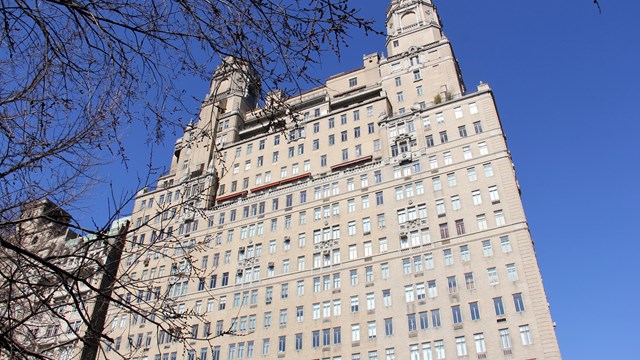
The Eastside neighborhood entitled Park to Fifth Avenue (between 60th and 86th Streets), reaped the highest scores of any Manhattan neighborhood, earning a "ten" in every category except Subway Transportation. The locale is 20 percent single, the remainder evenly split between families and couples.
The entire Eastside domain ranked lowest across the board in subway convenience. The city, debating construction of a Second Avenue subway line for years, recently agreed, along with other government agencies, to include a Transportation Bond Act on the November 2000 ballot. If residents vote in favor of the Act, a Second Avenue subway could become reality, adding a new dimension to the community’s livability.
Overall, the Eastside–bordered by Central Park and Carl Schurz Park–scored big in the Parks category, with the exception of the Core East Side (Park Avenue to the East River, 66th to 86th Streets), which netted a "one." The absence of parks, however, has had no effect on the neighborhood’s singles quotient, which is the Eastside’s highest.
"It’s convenient to the subway and there are plenty of places for shopping and dining," says resident Karen Whitfield, a fan of the Core East Side’s park along the East River. "I absolutely love it. I read there and walk there a lot."
Family living is predominant in the 100 percent-residential Carl Schurz Park Area (close to the East River from 79th to 96th Streets) which explains why the community scored low for shopping areas, dining spots and culture.
Although East Harlem (Lenox Avenue to the East River, 96th Street to Harlem River Drive) received the survey’s lowest scores, Keith Yazmir, director of communications for New York City’s Convention and Visitor’s Bureau, says Harlem’s renaissance is flourishing. "Infrastructures are being developed very quickly. In the not-too-distant future you’re going to see a more heated real estate market there." Other unpopular spots amongst Manhattan co-op and condo buyers were Kips Bay (Fifth Avenue to the East River, 28th to 34th Streets), and the Lincoln Towers/Trump Place area (Amsterdam Avenue to the Hudson River, 59th to 70th Streets).
WESTSIDE
The Westside, home to more families than any other Manhattan neighborhood, nabbed distinguished scores. While Central Park West (Columbus Avenue to Central Park West, 70th to 96th Streets) took highest overall honors in Manhattan’s western domain, it lags behind its other westerly neighbors in accessibility to shopping.
The Upper West Side (Riverside Drive to Central Park, 96th to 110th Streets), has "zero" historic ambiance according to the analysis but makes up for it in trees, parks and subway transportation. The Columbia University Area (Riverside to Morningside Drives, 110th to 125th Streets) is a study in history. Alon Livne, customer service manager for New York City’s largest moving company, Moishe’s Moving Systems in Manhattan oversees the quality of service to the people moving, talking to hundreds of customers before and after their move. Moishe’s also has a customer satisfaction survey on which customers provide some some general info about why they’re moving to or from a place. Says Livne, "People are looking for character; an area that doesn’t look the same as everything else around it." He continues, "They’re moving to places they did not move before–like around Columbia University, or the West 40’s near Trump Towers.
"The streets have a nice, old character," says Livne of the Columbia neighborhood in which he resides. "Once people feel safe in the area, which they do now, nothing stops them from moving there. As far as price," he says, "the area is still affordable compared to other areas." But he acknowledges that the neighborhood’s real estate prices have risen in the past year.
The West End Avenue/Riverside Drive area (West End Avenue to the Hudson River, 70th to 96th Streets), and Central Park West (Columbus Avenue to Central Park West, 70th to 96th Streets) took "boughs" for Trees & Greenery; Parks; and Historic Ambiance. The area sandwiched in between Amsterdam to Columbus (West End to Columbus Avenues, 70th to 96th Streets), received lower scores overall, but enjoys more shopping spots than its neighbors, and far more gastronomic/cultural delights than the West End Avenue/Riverside Drive scene.
LINCOLN center
The Lincoln Center area–home to some of the metropolis’s finest music, also hit high notes in dining and subway accessibility.
The lack of quality shopping in the glamorous Central Park South expanse (North of 57th Street along Central Park, including Columbus Circle, up to 70th Street), has not deterred it from becoming a hot—spot for singles. Family living is uncommon overall in the Lincoln Center region.
The Lincoln Towers/Trump Place area (Amsterdam Avenue to the Hudson River, 59th to 70th Streets) flopped in the arenas of eateries and culture, and received a "zero" in Historic Ambiance. In the past, says Livne, "The area was isolated as far as restaurants or shopping." He credits Trump’s construction as being an impetus for migration to the site. "Nowadays, you don’t have to walk ten blocks to get to a place from there. You can get everything two or three blocks from your home."
MIDTOWN
Food and culture took top kudos in the Midtown district. The Midtown neighborhood (Fifth to Lexington Avenues, 44th to 60th Streets) is the gem within Bellmarc’s larger Midtown domain.
If you live in Murray Hill (Madison Avenue to the East River, 34th to 40th Streets) "you’re basically close to everything," says resident Patrick N. Z. Rona. "It’s architecturally very pretty, and the views are unique because you’re looking up at the skyline." There are no tall buildings in Murray Hill, he notes, so "you can still see a nice skyline."
Although the survey rated Murray Hill as being only 20 percent families, Rona says that’s changing. "It has gone from being more singles to a good balance of families. There are good schools in the area, like The International Preschools and the United Nations International School."
Half of the Sutton/Beekman Place section (First Avenue to the East River, 49th to 59th Streets) is comprised of couples, a percentage rivaled only by SoHo, downtown. Although the Grand Central area (Avenue of the Americas to Third Avenue, 34th to 44th Streets) is not the ideal place for retail shopping, it definitely scores for singles’ shopping; a whopping 70 percent of its residents are unmarried.
June Jung-Hye Yeum likes the small park that’s near her Tudor City home (in the survey’s Turtle Bay/United Nations section), and the fact that the area is within easy reach of the subway, and her office. "There are a lot of singles with pets in the neighborhood," she says of the neighborhood Bellmarc rated 50 percent single.
GRAMERCY/CHELSEA
Bellmarc’s Gramercy/Chelsea domain doesn’t have much shaking in the Parks and Greenery categories, with the exception of the Prime Gramercy Park area (Third to Park Avenues, 17th to 22nd Streets) which also scored a "ten" in Historic Ambiance.
You can shop-till-you-drop in Herald Square/Greater Chelsea (Fifth Avenue to the Hudson River, 28th to 36th Streets). "It’s only within the last five years that the West 30’s have been judged fit for major residential settlement," says Seth Kamil, founder of Big Onion Walking Tours. "There were always people who lived there, but it was mostly factory space. Now it has all these hot condominiums." The fact that the area is 90 percent commercial, may be the attraction for its 60 percent singles populace.
The best singles scene in Gramercy/Chelsea is the Union Square area (Third to Fifth Avenues, 13th to 17th Streets).
While Jordan M. Anger believes that his Chelsea neighborhood (Fifth Avenue to the Hudson River, 14th to 23rd Streets), warrants the high score in eateries bestowed by the survey, he takes issue with the designated low scores in trees and shrubbery, and in historical sites. "We have plenty of greenery," he challenges. His co-op’s courtyard has a vast garden space, he says, and many neighborhood buildings are encircled by large green areas.
"There’s block after tree-lined block of ancient, beautiful brownstones," he says of the area’s historical aspects. His residence, the landmark London Terrace building, has a stone in its foundation that came from the home of the man who settled Chelsea. "The area is named after the Chelsea neighborhood in London," he notes. An old monastery also graces the area.
"There’s a really friendly feel to the neighborhood that I don’t think exists in many places anymore," says Anger.
DOWNTOWN
Super-high marks in Manhattan went to Greenwich Village/Lower Fifth Avenue (4th to 7th Avenues, Houston to 14th Streets)–where the only score below an eight reflected the locale’s lack of parks.
Bellmarc’s highly-sub-sectioned Downtown district is scooped mostly by singles; the Wall Street area and the East Village are 75 percent and 70 percent single, respectively. Battery Park City, which received dismally low scores in everything except Parks and Greenery, is the only downtown area with a substantial showing of families (40 percent).
The East Village has become very civilized compared to 15 years ago, jokes Livne. "You used to see very young people there," he says. "They’re always the first to explore an area. Now it’s a very trendy place. It’s unfortunate that there aren’t any places in Manhattan that are still affordable for young people."
The Lower East Side (Houston to Chambers Streets, Bowery to the East River), has "a lot of electronics stores and some great sour pickles," he says, "but it’s not a neighborhood the average New Yorker wants to live in at this point." He predicts that will change in three to five years.
The Wall Street area, still 95 percent commercial, saw mostly unflattering numbers, but carried a "ten" in Subway Transportation, as opposed to Battery Park’s "one" in the straphanger category.
In terms of dwelling spaces, "the Wall Street area is up and coming," says Yazmir. "It used to be just offices, but now there are residential units. Hotels are going up downtown. There were never hotels there before. There’s been a retail and restaurant explosion." In many ways, he notes, "it’s where New York City and the country began. New York City was the nation’s first capital. George Washington was inaugurated on the steps of Federal Hall in 1789."
The Soho sector is 50 percent couples. Binder explains, "The amenities there are more cosmopolitan, restaurants and artistic establishments. It’s not a family-oriented environment. Yet, the apartments are pretty big, a lot of lofts. There aren’t many studios."
The gentrified TriBeCa received fairly low scores, but grilled up a "seven" (its peak score) in Restaurants & Culture. If you’re a late-night owl, don’t expect to find a lot of action here, but as one young resident proclaimed at two in the morning as he exited a cab onto TriBeCa’s deserted streets, "We like it quiet here."
Ms. Herskowitz is a freelance writer living in Manhattan.

Leave a Comment