
2008 April


2008 April Vol. 28, No. 4

Focus on...Real Estate Market/Expo

A Look Back at an Active Year

By Stephanie Mannino

As 2007 came to a close, it seemed that the real estate market in nearly every part of the country had cooled. But in New York City, although movement had slowed, the market did not take a downturn as many had expected. Co-ops and condos continued to move—although perhaps without the buying and selling fervor that characterized the earlier part of the decade. Read More

Moderating Along with the Market

By Keith Loria

As the housing market boomed in the early parts of the last decade, apartments in New York City seemed to be snapped up mere days (sometimes mere hours) after being put on the market. As the trend continued, thousands of people set out to get their real estate license and become professional brokers in hopes of cashing in on the frenzied market. Read More

Defying an Uncertain Market

By Raanan Geberer

When one looks at the real estate market in New York City—which, excluding such homeowners’ havens as Bay Ridge, Bayside and Staten Island, usually means the apartment market—one sees a picture similar to last year. All over the country, one hears about “the real estate bubble bursting,” but that metaphor doesn’t seem to have reached New York yet. Read More

Changing Markets, Evolving Expectations

By Lisa Iannucci

In the 1950s, televisions were pieces of furniture the size of deep freezers. In 2008, TVs are flat and hang on a wall. The 50’s were about jukeboxes; the 80’s saw the Walkman and CD player and, today, it’s the small-but-mighty iPod. And computers? In the 1950s, they took up a whole room. Today, they are held in the palm of your hand. Read More

The Process of Building Residential Housing

By Greg Olear

If one aspect of New York has remained constant since the city’s founding, it’s that nothing remains constant. New York’s own Washington Irving, the writer for whom Irving Place is named, groused in his September years that the city he recalled from his youth no longer existed. Too much had changed, he lamented. And that was in the 1850s, before the Civil War, skyscrapers, and Donald Trump. Read More

Challenges and Rewards

By Keith Loria

With new and luxurious condos going up all the time across the city, management companies are champing at the bit to become the first managing agent for these often high-profile, upscale properties. If it’s a choice between managing a new multi-unit residential property or an older existing property, it seems like a no-brainer to go with the new one. After all, becoming the first managing agent offers firms the opportunity to establish proprietary operational and procedural systems on a property with all the latest amenities. Plus, the managing agent’s job must be easier since everything from the HVAC system to the doorknobs works, everyone is happy to be in a shiny new home, and the maintenance and structural problems that face older buildings won’t appear for decades…right? Read More

The Best and Worst of Life in New York City

By Greg Olear

The Big Apple. Paris has just as much romantic cachet. Rome is every bit as frenetic. London has excellent theater, too, and there are also esteemed financial institutions in Zurich and Hong Kong and Frankfurt. Tokyo and Mumbai and Jakarta have just as much population density, if not more. Berlin’s art scene is probably more robust. Kuala Lampur has tall skyscrapers as well. And the cabbies drive just as crazily in Naples. But no other city has all of those things, and more. As former Mayor Rudy Giuliani put it to David Letterman a few years ago, suggesting a new motto for New York: “We can kick your city’s…” Well, you can imagine. It was Rudy talking, after all. Read More

No Typical Days Work

By Anthony Stoeckert

Ask Scott Stringer to describe a typical day in his job as Manhattan Borough President and he’ll answer that there’s no such thing—and that’s the way he likes it. Read More

Government on a Neighborly Basis

By Hannah Fons

New York City’s governing structure is complex for a metropolis of 8.2 million residents—it takes a lot of people in a lot of departments and organizations to keep the city running smoothly. Some of those people (the mayor, for instance) are household names, while others are perhaps less well known. The members of the city’s community boards may fall into the second category, but the work they do for the city is no less important for being done largely behind-the-scenes. Read More

From Amalgamated to Central Park West

By Debra A. Estock

Emma Lazarus perhaps said it best in her immortal poem in which she spoke about the wave of immigrants that were welcomed to American’s golden shores. Generation upon generation of newcomers have chosen to settle in New York City and its boroughs to find their piece of the American dream. They came from every country, economic class and social strata to the Lower East Side of Manhattan, to Brooklyn and Queens, to places like Bushwick and Bensonhurst and many other neighborhoods, to start a new life in America. Between 1820 and 1860, a total of four million immigrants entered the United States, most coming through New York City. Read More

Visit The Cooperator's 21st Annual Co-op & Condo Expo

By Hannah Fons

Yale Robbins, Inc. would like to warmly welcome our sponsors, exhibitors, and guests to The Cooperator’s 21st Annual Co-op & Condo Expo on April 29th at the Hilton New York. This year’s event from 9 a.m. to 5 p.m. will continue our long-standing tradition of information, education, and networking opportunities for those in the co-op and condo housing field. Read More

Planning for the Future

By Domini Hedderman

It’s difficult to plan a budget for your building—and, more importantly, to stick to it—if problems arise that your board/management team haven’t anticipated. Maintenance issues and structural crises aren’t just inconvenient surprises; if you haven’t planned adequately, they can decimate your community’s bank account. Read More

Greening and Improving New York City

By Raanan Geberer

For the past year or so, PlaNYC 2030, Mayor Michael R. Bloomberg’s sustainability initiative (“sustainability” being a new buzz word for “environmentally friendly” or “contributing to a better quality of life”) has taken center stage at City Hall. Read More

Tips for Seasonal Sprucing Up

By Lisa Iannucci

The snow is gone, the thermometer is inching higher, flowers are blooming and you’re ready for springtime. Unfortunately, your building may not be. Thanks to winter’s sand, snow, grit and lack of attention, things may be in less-than-gorgeous shape. Warmer weather is a great time to get out and see what needs to be done to restore your building’s curb appeal. Here are a few tips to get you organized and on your way. Read More

Q&A: Shared Living Arrangements

By Andrew P. Brucker

I have lived in a co-op for the past three years. I am planning on having my boyfriend move in with me in a few months. Are there any rules or regulations that will prevent that from happening within my co-op? Read More

Q&A: The Majority Rules?

By David L. Berkey

Our board has unilaterally determined that a “majority” of residents want an exercise room. And the board, in spite of this, continues to spend our money to pursue the project despite our requests to “cease and desist” and hold a general meeting to discuss the issue and answer a complex range of unanswered questions. Read More

Q&A: Reviewing Reverse Mortgages

By Peter G. Goodman

Does a co-op board have any involvement in an individual building shareholder securing a reverse mortgage? Read More

Do Not Pass Go!

By Mary K. Fons

Inside most multi-unit residential buildings, there are many areas that should be strictly off-limits to everyone but trained building staff—and we’re not just talking about the manager’s inbox. Machine rooms, elevator shafts, compactor areas, roofs, and other places used to house potentially dangerous equipment or materials are all spaces that must be kept secure for the safety of the residents—and to avoid costly liability issues for the building itself. Read More

Knowing What You're Worth

By Jonathan Barnes

For anyone getting a mortgage for a new apartment, a property appraisal is part of the cost of securing their new place. In fact, for existing apartment owners, it’s one of the most important things they can do for their property. An appraisal is usually necessary to insure a building or apartment, or to secure financing for a project or renovation. Before a lender will cut a check, they likely will have the property assessed by a professional appraiser to ascertain its current value. Read More

The Department of City Planning

By Liz Lent

Imagine the biggest three-dimensional puzzle you can. Now imagine fitting eight million people into this puzzle. Putting the pieces together takes more than just luck. It takes enormous skill, precision and foresight. Those are three attributes that the New York City Department of City Planning (DCP) works hard to cultivate—it’s their job to put that puzzle together and ensure that the people, buildings and infrastructure of all five boroughs meld together as seamlessly as possible. It’s not a challenge for the faint of heart. Read More

A Look at Buildings, Landmarks and Neighborhoods of the Past

By Brendan Flaherty

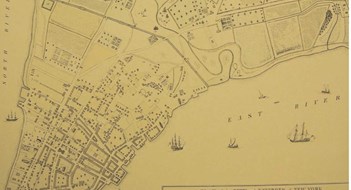
With so much going on, so much frenetic energy, life in New York City takes the utmost focus. The senses are overwhelmed with stimuli—people, dogs in sweaters, neon advertisements, new construction, bleating traffic—and amidst all that, there is work, board meetings, family; personal lives and the responsibilities of day-to-day life. In some ways, like carriage horses in Central Park, we all have to put our blinders on sometimes, and in a bustling city like this, it is no wonder that as the present moves forward, some relics of the past—buildings, landmarks, even whole neighborhoods, are largely forgotten. Read More

Where Can Boards Turn?

By Denton Tarver

Most board members are volunteers—some may have experience with certain aspects of running a building, but most come to the job relatively green, armed only with a sense of responsibility and a desire to serve their building community. So where do boards turn for help when a question comes up, or a situation arises that they don’t feel equipped to answer on their own? Read More

A Serious Problem for Boards and Homeowners

By Douglas Stern

Over the past three years, bedbug infestations have increased exponentially in New York City, causing panic among homeowners, co-op/condo boards and property managers. In 2004, there were 1,800 bedbug complaints recorded by the city. By last year, complaints had more than tripled, topping 7,000. Concern that 2008 will see even more bedbug activity recently prompted the city government to sponsor educational seminars for residents and property managers aimed at preventing and eradicating bedbug infestation. Read More

Drawbacks of the Boom

By C. Jaye Berger, Esq.

In case you haven’t noticed, there is currently a building boom taking place in New York City. With so many scaffolds and cranes dotting the skyline, it seems like everyone wants to get into the real estate game and be a developer. Read More

Building Operations

On The Board

NYC Living

Newspaper subscription

subscribe Subscribe to "The Cooperator" newspaper - it is FREE. Manage my subscriptions

E-Mail Newsletter

Would you prefer receiving the summary of new articles by e-mail? Your E-Mail: