
Taking a Bite out of the Big Apple

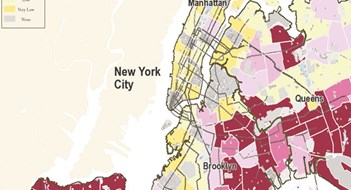
In most cities, traditionally, the choicest pieces of real estate are owned by native sons and daughters, people who are from the area. Money comes in from everywhere, but the entrepreneurs making that money are homegrown. Heinz and Carnegie in Pittsburgh, Ford in Detroit, and more recently, Bill Gates in Seattle. Read More
New Options for Co-ops
As many readers are by now aware, a rule that proved a hindrance to the operations of many co-ops in New York was drastically altered in December of last year--and the changes are having far-reaching effects on the city's co-op communities.
Read MoreWhat Your Board Should Know
Co-op boards are notorious for scrutinizing potential shareholders. Condos, on the other hand, are often thought of as more lenient—and thus more desirable—by buyers because condo boards lack the power to probe too deeply into a buyer’s personal business. While this might be attractive to purchasers, it means the board has less control—and often little say—in who resides in their building. Read More
Foreclosure Epidemic Skips Big Apple...So Far
Whether you own your own home or not, you can’t help but know about the subprime mortgage crisis that is sweeping across America as foreclosures are claiming people’s homes everywhere we look. Read More
Dealing with Special Assessments
Boston, Massachusetts may seem worlds away from New York City, but the story of one embattled condo building there represents a dire cautionary tale for boards and managers everywhere. Read More
Who Makes the Cut
When the author of this story bought her home, she sat in disbelief when the lawyers handed her the last paper to sign—the one that confirmed she signed all the other papers! Read More
Money Makes the Board Go Round
They don’t call it “the bottom line” for nothing. When all is said and done, pretty much everything in business (okay, pretty much everything, period) comes down to money. In most business situations, a chief executive officer or a company president has the final word on money matters; the association or residential co-op business model dictates that fiscal responsibilities are shared between a building’s board and its managing agent. This complex relationship demands that managers embrace understanding, communication, and serious patience when it comes to a building’s money matters. Read More
Ordering Supplies for Your Building
Along with big-ticket items like boilers, HVAC systems, and the like, residential buildings also have to purchase lots of little, everyday things like cleaning supplies, light bulbs, and paper products to keep up with day-to-day maintenance and operations. Though not necessarily expensive in and of themselves, costs for these small things can definitely add up over the course of a year. As the ones charged with ordering and inventorying these supplies, it’s up to managers and building staff members to keep a lid on costs and be conscientious about limiting waste. Read More
Living the Loft Life
If only I had had an extra $100,000 25 years ago. (OK—an extra $100,000, today would be good too.) But that’s what I kept thinking as I sat chatting with Oliver Allen, a retired journalist and author who is now a regular contributor to his neighborhood’s monthly community newspaper, The Tribeca Triband its “unofficial” historian, in the to-die-for loft that he has shared with his wife Deborah since 1983. That’s the year the two of them pulled out of suburban Pelham, New York and never looked back. Read More
Q&A: Board Ignoring Quorum
Our co-op has not had an election for the board since 2004. Many shareholders rent their units and are concerned that the sponsor has two seats on the board and owns/runs the management company and rental office from here. The problem is that we no longer have a quorum since the sponsor sold his shares to investors. I researched Business Corporation Law, and found Section 603 about the right of shareholders to call a special meeting. I therefore informed the lawyer that I would use this section if in fact we did not have a quorum. The board appointed someone to the board vacancy, in a rush, without the benefit of a quorum. I then asked the lawyer about this, and expressed concern that it was improper to have an election without a quorum. He replied that it was being investigated. Read More
Q&A: Can Minority Shareholders Force an Election?
Our president resigned before the board appointed officer positions, but he showed up at the meeting in which a new officer was appointed to the board. Read More
Q&A: Replacing Terraces
Our condominium board of managers is planning to replace all the terraces in our condo, claiming they are common elements. Is that correct, or is each terrace the property of the unit owner? Should all the unit owners be assessed or only the ones with terraces? Read More
Q&A: Who Pays the Assessment?
There is a question in my building as to whether or not a new homeowner is
responsible for paying an assessment that was extended by the HOA board before
the transaction was completed. The previous homeowner paid the two-year
assessment at the closing. After which, the board extended the assessment to
the new homeowner. Read More
Q&A: Rotten Support Beams
I own an apartment in a building that was constructed in 1889. The floors in the apartment slope as the building has settled over the years. Recently, the bathroom floor has cracked and is showing signs of sinking. I’m afraid the support beams are rotting out underneath. I want to do repair/reconstruction work on the apartment and wonder if I am responsible for whatever work must be done on the support beams, assuming they are damaged and need to be replaced/repaired. Read More
Q&A: Submitting Candidate Filing Forms
I have a question regarding running for the board of directors, particularly the election rules. Can shareholders submit a candidate filing form after the filing deadline? The form was posted and the date has passed. Can the board accept submissions without notifying the homeowners of the change? —Cooperative Candidate Read More