
Urban Landscaping Tips from the Pros

You've got to hand it to city plants. They squeeze themselves into the tightest of spaces, and each day they battle pollution and smog, get stepped on (or worse, thanks to the city's dog owners) more times than they'd like to count. In short, they're a lot like us—and like us, they need a certain amount of care and tending in order to thrive in the concrete jungle. Read More
Good Oversight Means Better Results
Being a co-op or condo owner often means
multi-tasking—especially if you happen to serve on your
building's board. To keep your home in good repair and to comply with
Local Law 11 and other city building codes governing façade repair
and maintenance, it will eventually become necessary to hire professional
contractors to perform exterior maintenance and/or repair work. Read More
What They're Doing Up there
When you walk around busy areas of Manhattan, Brooklyn and elsewhere in the city these days, it's hard to miss the large number of structures stretching above the sidewalk, made up of huge sheets of wood resting on thin metal poles. Most people call them scaffolds, but they are actually known as sidewalk sheds (a scaffold is actually a work platform erected above a sidewalk shed). Read More
Do's and Don'ts of Exterior Signage
To paraphrase the 1948 film, and later, television series of the same name, The Naked City, there are eight million stories in the naked city. And probably ten times that many signs. They are everywhere, all asking for our attention. There are billboards and banners, blinking neon letters and twinkling LEDs. Go to Times Square and there's probably at least one example of every kind of sign ever devised. It wouldn't be surprising to find a few tablets cut in stone, or parchment scrolls tucked away in some corner, advertising psychic readings or after-theater dinners. In short, signs are all around us. Read More
Don't Crack Under Pressure
As a child, we tried diligently to avoid stepping on the cracks in the sidewalk, because, after all, our mother's backs were hanging in the balance. As adults, we simply take sidewalks for granted, often not looking down and watching where we are going, until we catch our foot in a split sidewalk and are sent tumbling to the ground. Read More
The Industry's Biggest Trade Show Returns
Spring means many things to many people—but for anyone involved in the tri-state area's residential real estate industry, The Cooperator's 21st Annual Co-op & Condo Expo—to be held this year on Tuesday, April 29th on three floors of the Hilton New York—is as much a part of the season as budding trees and warmer temperatures. Read More
A Look at New York City's Legendary Architecture
New York City is filled with exciting and inventive
architectural styles. There are many different schools of thought
represented in the dense mix of office, residential, and commercial
buildings on the island of Manhattan and throughout the boroughs, and each
site may have been occupied by a succession of buildings, each reflecting
the changing needs and expectations of their times. The skyline, made up of
the outlines of these various buildings, is instantly recognizable, but
recognizing the individual features can be a challenge to the untrained
eye. Read More
Cooperative Ordered to Purchase Apartment
A Bergen County, New Jersey jury in November rendered a
$1.3 million dollar verdict against a cooperative corporation and its
management company for failing to remediate a longstanding water problem
that led to mold growth and exposure for a Fort Lee couple. Read More
Essential Elements of Your Building's System
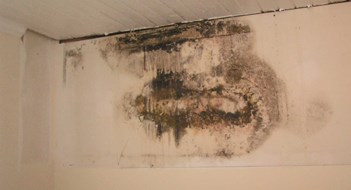
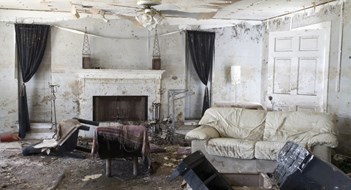
Water damage can wreak havoc on any co-op or condo. When it leads to serious problems like mold and structural damage, it can be a costly problem to address. To avoid the cost and hassle of dealing with water damage after the fact, it's not enough to simply trust in the waterproofing elements integrated into your building during its construction. Read More
Out with the Old, In with the New
As presidential candidates on the national scale rally around the idea of "it's time for a change," so too is the New York City Department of Buildings (DOB), rolling out its first major set of changes to the city's building code in 40 years. The new Construction Codes will ensure that, among other things, qualified technicians perform building inspections. Read More
Keeping History Alive
The Dakota. The San Remo. The Ansonia. Greenwich
Village. Gramercy Park. DUMBO. New York City and its five boroughs are home
to buildings and neighborhoods that are celebrities in their own right, and
preserving the historic character and impact of those buildings is an
important part of preserving the city's legacy for the future. One
group wholly devoted to preserving (and sometimes improving) that legacy is
the city's Landmarks Preservation Commission, the governing body
responsible for designating neighborhoods and buildings as official
historic landmarks. Read More
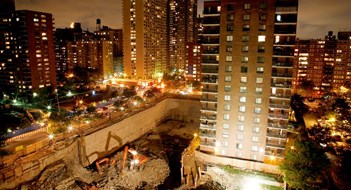
From Urban Renewal to Urban Luxury
Affordable apartments with fresh air, good light, and
attractively landscaped grounds for middle-income people—those were
the goods Park West Village was created to deliver in the late 1950s and
early 1960s as part of a government-subsidized urban redevelopment plan. Read More
Q&A: Open Election Period
Our co-op elected its new officers, as usual. However, this year, there were two amendments to the proprietary lease, one for staggered board terms and the other to change our transfer fee, or flip tax, from one month’s maintenance to two percent. Our lease requires at least 2/3 or 66 percent of the shareholders to pass amendments. It’s very much a standard 1989 document. The flip tax was defeated last year, but the board insisted on trying again and launched a major offense to get it passed. As such, they are keeping the voting open, although the new officers for 2007 were duly elected and are now attending to their appropriate duties. Read More
Q&A: Hallway Clutter
Certain shareholders in our building keep some personal belongings (i.e., bikes, baby strollers, skates) in the hallways next to their apartments. Sometimes we have to squeeze by their hallway clutter to get to our own units. Is there any legislation about personal belongings in stairwells or hallways? If not, what can I do to fix this problem? Read More
Q&A: Structural vs. Non-Structural Changes
The original condo declaration, bylaws, amendments and house rules allow for renovations without board approval to interior units if they do not affect common area are not structural in nature. I installed a wall partition (does not affect a bearing wall) in the dining room, which has created an additional room. The condo attorney is arguing that when you change the “character” of a unit this is considered structural. In addition the board is upset that the original floor plan has been altered. I am an investor in this complex. I do not intend to have overcrowding in the unit—the unit does have greater rent ability/potential for profit. I obtained all proper permits from the town for wall partition. The condo attorney has since sent a cease and desist letter to the town to not issue such permits and certificate of compliance anymore. I intend to fight this issue by asking the court for a permanent injunction. Am I being reasonable? Is the condo attorney right that structure equals character? Read More
Q&A: Presidential Voting of Rental Shares
My building has a rental apartment that was bought from a previous shareholder. Apparently, an amended document was not filed with the state attorney’s office, so there are still shares attached to this apartment. These shares were voted by the chair of the co-op board in the last board election. Is this legal or appropriate? Read More
Q&A: Keeping the Kids Quiet
I’m a president of a new condo and have no experience running one prior to this. There is an apartment in the condo that consistently has children dropped off. After some inquiry it turns out to be the children of relatives, around 4 or 5 children in total, ranging from 3 to 11 year olds, supervised by two grandparents. However, the combination of so many children causes a lot of noise in the adjoining units. Those units now complain that during the day (weekdays from 3 p.m. to 8 p.m. and weekends all day) there are children running, jumping, screaming, and banging walls. Read More
Q&A: Secondhand Smoke
The tenant below me smokes nonstop. Her windows are always fully open and the smoke travels directly into my apartment above. My apartment smells like an ashtray and of course leaves us vulnerable to second-hand smoke. Even with our windows closed and air-conditioning running, it still smells awful. Do I have any legal recourse? Read More
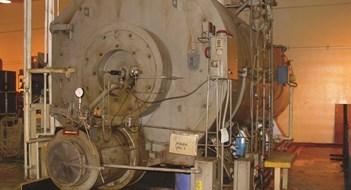
Keeping Your Boiler Efficient All Year Long
Now that winter is drawing to a close, residential and
commercial buildings will soon be switching their heating systems off and
their air conditioning systems on. This is the ideal time of year to begin
preparing your boiler for the next heating season assuring the building
that the boiler will continue to operate at peak efficiency which
translates into meaningful dollar savings. Recent inflated oil prices have
alerted many buildings to the basic fact that an inefficient boiler will
cost a building unnecessary wasted dollars that could be saved with proper
maintenance. Read More
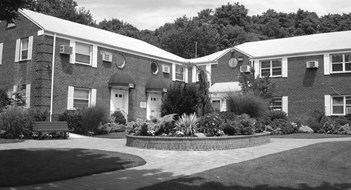
A Case Study in Queens
My family and I have been living in Glen Oaks Village
in Queens for over 25 years. Originally built for the families of soldiers
returning after World War II, the garden-style cooperative community is one
of the largest in the New York metro area, boasting nearly 3,000 units and
providing housing for some 10,000 residents. Read More
The Cooperator Hosts Legal Issues Roundtable
The Cooperator headquarters in Midtown Manhattan again
played host to a group of real estate industry professionals gathered to
discuss their strategies and challenges, trade anecdotes (both the positive
and not-so-positive), and meet their colleagues over breakfast. This time,
the assembled group was composed of legal professionals specializing in
co-op and condominium law and recent changes to the 80/20 rule provided
some interesting food for thought. Read More