
True Crime
A few years ago, when I lived in the East Village—in a one-bedroom, fifth-floor walk-up—I had a creepy experience when the cable guy came to hook up our service. He arrived in a beat-up windowless van that looked like it had been boosted from an impound yard, and nothing about him betrayed the fact that he worked for the
cable company. He might have been a subcontractor to a subcontractor, for all I know. But something about him seemed shady.
Read More
Staying Secure
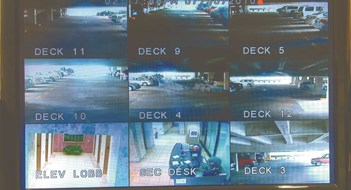
Recent nationwide crime statistics show that New York City and its outlying
suburbs has become one of the safest cities of its size in the past 15 years.
Nevertheless, in a sprawling metropolitan area encompassing New York and New
Jersey, security is always a concern.
Read More
Information is Everything
Your co-op or condo unit houses more than your material possessions. The
management office also typically contains detailed information about you—including your social security number, credit card number, emergency
information, phone number and many other important documents relevant to your
security.
Read More
Your Security Web
The days when an apartment building's 'security system' consisted of a tricky
front door lock and the landlord's ill-tempered dog are long past. Today,
security measures range from old-style deadbolts to high-tech biometric
screening equipment, with a lot of technology in between that includes both
electronic and human components. For association board members and others
living in co-op or condo buildings, understanding the functions and necessities
of these security components is essential to having a safe community. Any
resident should know how these various measures interlock to form a web of
protection for them and their property.
Read More
Conducting Employee Background Checks
Typically the sources of terror in horror movies come from ghouls and zombies.
Victims in these films find themselves trapped in an abandoned warehouse or
haunted mansion with no chance of escape or survival. These films leave the
audience feeling appropriately freaked out as they leave the theater and head
back to the safety and security of their co-op or condo apartment.
Read More
Brighter Days Ahead in 2012?
While the economy sputters along and unemployment rates remain steady at more
than nine percent, there doesn't seem to be much call for celebration—but all is not gloom and doom. The real estate market has been one of the most
notable casualties of the recession but in certain regions sales of homes and
condominiums are showing positive signs, giving hope to an industry that has
been treading water for over three years.
Read More
Wiring Your Co-op or Condo
It’s been a long time since cable modems were the gold standard in Internet
connectivity—or at least it seems like it’s been a long time. Telecommunications as a field has been developing at a
dizzying pace, and multifamily buildings—both new developments and existing properties—face the challenge of providing residents with fast, reliable, Wi-Fi and other
telecom-related services.
Read More
Year End Housekeeping
Organizing and keeping a co-op or condo’s books and other records is, on the surface, not that different than keeping a
budget for one’s home.
Read More
Holiday Wishes
The last few years have been stressful and uncertain for many in the real estate
game—developers have had to adjust projections and expectations for certain projects.
Likewise, sellers and brokers have had to acclimate to a market that, while
perhaps not as bleak as in some other parts of the country, is not seeing quite
the blaze of activity that characterized the early part of the last decade.
Managers and board members have been up against a wave of foreclosures,
residents in arrears with fees and assessments, and other recession-related and
non-recession-related challenges. Boards are fighting, and there have also been
many legislative changes that make it difficult for managers to plan projects
the way they once used to, giving them a real challenge on how to address
issues that were once a breeze.
Read More
Minor Problems —Major Headaches
In today’s turbulent economic times as so many of us try to regain our financial footing,
the question of how to balance the bottom line and still take care of all that
needs to be done in a co-op and condo building remains a difficult one.
Certainly, in an ideal world, any and all maintenance needs would be fixed the
minute they occur. With smaller staffs and smaller budgets, however, priorities
must be set and sometimes a problem or two has to be put on the back burner.
Read More
The National Fire Protection Association
Fire in the home can be an absolutely terrifying and life-altering occurrence.
In 2010 alone, there were 1,331,500 fires reported within the United States,
causing more than 3,000 civilian deaths, 17,720 injuries, and $11.6 billion in
damage. Within a matter of seconds, everything you treasure can be engulfed by
flames. And although we cannot prepare for life’s accidents, there is an organization that can educate us on how to avoid them.
Read More
Changing SoHo
Today’s SoHo is synonymous with world class dining, prestigious art galleries, chic
clothing stores, luxury boutique hotels, trendy lounges, picturesque cobble
stone streets and stunning cast iron architecture.
Read More
Security on the Go
Not so long ago, having a security system required drilling through the walls of your cooperative or condominium building and involved installing many spools of wire attached directly to a bulky keypad. Read More
Controlling Your Building's Energy Usage
Charged with managing their properties’ expenses, boards of co-ops and condo complexes place a high priority on controlling energy consumption. In some regions, multi-family properties are being aided by local utilities and incentive programs that encourage building retrofits that improve energy efficiency. Read More
Q&A: Imposing a Flip Tax or Transfer Fee
At a general meeting of our condominium, a proposal for a flip tax/transfer fee on the sale of a unit failed to get enough votes. Subsequently, the board of managers decided to impose a transfer fee of five months maintenance charges to be split between the buyer and the seller. The bylaws of the condominium have no provision for a flip tax or a transfer fee. Can the board of managers do this without a change in the bylaws? Read More
Q&A: Inequity in Building Maintenance?
I am a shareholder in a Lower East Side tenement co-op. The building was originally 6 floors with 4 apartments on each floor. In 1985, we formed a corporation and purchased the building from the landlord who had us purchase a money mortgage. He wanted half the money down and gave us 10 years to pay the rest. We then became a co-op and some shareholders bought the apartments adjacent to theirs and added an additional 30 square feet to their existing units. Read More