
2012 February


2012 February Vol. 32, No. 2


Focus on...Board/Shareholder Relations

The 25th Annual Co-op & Condo Expo
By Cooperator Staff

 Are you looking for a new management company or financial advisor? Does your  lobby need an extra splash of color? Is your co-op looking for replacement  windows or facade repairs due to Local Law 11 work? Read More

Following the Golden Rules

By J.M. Wilson

 Every co-op and condo association has its own house rules—rules and regulations (hopefully) based on common sense and aimed at protecting  residents' safety and quality of life without undue disruption or  inconvenience.   Read More

Involved & Invested

By Jonathan Barnes

 In an urban environment, people can feel isolated, though they live close to  each other. While high-rise residential buildings put families near one  another, living close doesn’t turn a group of neighbors into a community and that’s understandable, since people are busy and schedules are hectic. In some  buildings in their downtime, few residents eagerly attend their building’s annual meeting or socialize with their neighbors. But attracting committed  board members and creating a sense of community improves the quality of life  within the building and saves money. It’s good to know that there are many ways that co-ops and condos can work to  foster a stronger sense of community among their residents, while also  attracting new board members and committee members.   Read More

Renters on the Rise

By Lisa Iannucci

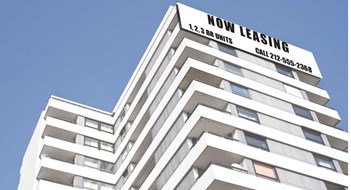
 Last December, The William Beaver House, located at the heart of New York’s Financial District, sat with 209 of its 320 units unsold—units priced from $900,000 to well over $2 million each. Unfortunately, while  sales had gone well for the 47-story luxury building during the previous few  years, the recent economic troubles let to a somewhat desperate situation for  the owner of the lavish property. Read More

Shiny & New

By Liz Lent

 For most people, few things are as stressful—or exciting—as buying a new home. That can be especially true for buyers and residential  unit owners who sign up to be among the first residents in a newly renovated or  constructed condo or co-op complex. There is the smell of the fresh paint, the  shiny new stainless steel appliances, the untouched bath tiles and pristine  hardwood floors— nothing quite beats that feeling of knowing that such a beautiful space is  ours. Read More

When Construction Projects Go Awry

By W.B. King

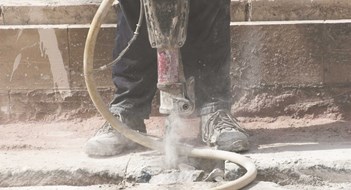
 Construction and renovation projects are necessary, but often troublesome—especially when they're occurring next door. For many residents and building  owners adjacent to an ongoing project, noise, debris and construction zones  diminish respective quality of life. The list of grievances fielded by property  managers can be long, varied and in some cases include damages, or worse. Read More

Revisiting Reverse Mortgages

By Raanan Geberer

 According to the most recent U.S. Census in 2010, an estimated 2.5 million  people—or roughly 13.5 percent—of New York’s population is over the age of 65. Older New Yorkers, especially in New York City  live in longtime neighborhoods or in senior-only developments. Some of them may  be in the market for a reverse mortgage, a type of loan structure available to  senior homeowners 62 years of age and older. Read More

A New Harlem

By Christy Smith-Sloman

 Today’s Harlem has a celebrity chef whipping up gourmet cornbread for President Barack  Obama, a new Starwood Hotel featuring loft-style rooms geared toward an urban  tech-savvy clientele, a newly opened 174,000-square-foot Target big-box store  that carries everything from Spanish-language greeting cards to multicultural  dolls to locally-produced Southern food. There’s even an intimate speakeasy tucked away on Frederick Douglass Boulevard  offering up live jazz from up and coming local musicians and staffed with  aspiring models serving up couture cocktails. Read More

National Association for Community Mediation

By Maggie Puniewska

 Unless you live in the perfectly utopian condo or co-op (in which case please  disclose where), conflict is virtually inevitable. Whether is it a noise  complaint or larger issue of governance, disputes between neighbors and board  members will arise yet are fortunately resolvable. However, because many  communities have a difficult time conciliating conflict, many residents and  boards are looking to outside mediation to help negotiate the problem more  effectively, with less dirty looks and cat fights involved. Organizations such  as the National Association for Community Mediation (NAFCM) and the Peace  Institute in Manhattan focus on promoting and utilizing specific resolution  strategies with trained professionals to help solve and mitigate conflicts not  only in condo and co-op communities, but also between family members, employees  and significant others. Read More

The Boards Role in Landscaping

By Teresa Carleo

 With spring around the corner, many co-op and condo boards and HOAs start  thinking about giving their landscaping design a fresh new look but they want  to keep it within their budgets. How can this be accomplished? Some common  sense questions will help to accomplish this. Read More

Robert's Rules to the Rescue!

By Roger Patching

 During the Second World War, the United States and its allies invested a fortune  in research to understand why so many people in the Axis nations seemed willing  to believe the unbelievable, do the undoable, and follow leaders who seemed  unhinged. Victory depended on understanding the ideology and behavior of the  enemy. When the Cold War followed, these studies continued for the same  reasons, and ultimately led to the development of a new field: Political  Psychology. Believe it or not, the things learned during those times of great  global strife can be applied on even the most micro level—at a co-op or condo board meeting, for example. Read More

Q&A: Is it Ethical to Get Paid?

By Barry G. Margolis

Is it ethical for board members or immediate family members to choose to do a  job that would normally be something the community would get together to do for  free (i.e. spreading out mulch in the park, pressure-washing the gazebo or  painting it) or hiring outside help for these kind of services. I am concerned  because one board member is using her family and herself to get paid for these  services. The work is fine, but is this ethical when you are on the board and  then request after the work is done to be paid for it? Read More

Q&A: Power Grab

By Stephen M. Lasser, Esq.

 I am a co-op owner. A renovation plan for my apartment was approved by the  building, the board and the city. Con Edison added a new power line to the building at no cost because the  building was at its capacity for the existing electrical load. It cost the building $150,000 to meter the new power line and also to complete  other renovations in the building to facilitate the installation. The building  board decided that the cost should be borne by the first shareholders who need  to add the extra power. This decision was made after my renovation plan was  accepted by the building board and, for that reason, is retroactive to my  project. But the addition was made to the common area, which should be the  responsibility of the entire cooperative. How can I prove that I am not liable  for the $15,000 charged to my co-op unit ($150,000 divided by 10)? Read More

Building Operations

On The Board

NYC Living

Newspaper subscription

subscribe Subscribe to "The Cooperator" newspaper - it is FREE. Manage my subscriptions

E-Mail Newsletter

Would you prefer receiving the summary of new articles by e-mail? Your E-Mail: