
2012 March


2012 March Vol. 32, No. 3


Focus on...Exterior Maintenance

Make Connections at the 2012 Expo
By Cooperator Staff

 As a co-op or condominium board member, you rely on a long list of service  professionals for work ranging from HVAC maintenance to parking lot sealing.  Finding the right person for the right job, though, can be a challenge. Read More

Green Exteriors

By J.M. Wilson

 More often than not, when boards or associations broach the issue of their  buildings “going green,” images of bamboo flooring, hemp drapes, or solar panels on the roof suddenly  spring to mind. The impression seems to be that in a condo, green upgrades are  difficult and costly—if not impossible—to do. Read More

Up on the Rooftop

By Greg Olear

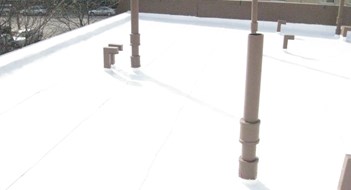
 The roof is the uppermost part of any residential building, serving as the first  line of defense against whatever the skies throw at its inhabitants. In many  New York co-op and condo buildings, the roof is also a social space, complete  with decking, planters, awnings, and sometimes even sun chairs or a hot tub.  These roofs do double duty—and as such, they're subjected to far more wear-and-tear than their  restricted-access counterparts.   Read More

Let There Be Light

By Anne Childers

 As recently as the 1930’s, only 68 percent of American homes had electricity. By the middle of the last  century however, most Americans enjoyed well-lit homes, and the light had  started to spread outdoors as well. Initially, yards and gardens were lit  purely for visibility and safety, but once decorative lighting became a  reality, there was no turning back. Today exterior lighting provides an  exciting way to protect, beautify, and showcase properties, both brand-new and  historic. Read More

Concrete Concerns

By Keith Loria

 In New York City, urban high-rises with sidewalk frontage and outer-borough HOAs  with walking paths, parking lots, and service roads are reliant on their paved  surfaces and therefore need to regularly inspect and maintain their concrete. Read More

Fire Escape

By J.M. Wilson

 Walking down the streets of New York City, the zig-zag iron work of fire escapes  immediately evoke romantic images of a simpler time, having been immortalized  in books, songs and plays from West Side Story to Rent. With some fire escapes  being as large as whole rooms, (measuring 31 ½ feet wide by 10 ½ feet long, and wrapped by a 2 ½ foot high railing in some neighborhoods), tenants have converted their fire  escapes into personal spaces for years; from private libraries, meditation  spaces, laundromats and arboretums to the ultimate skybox seat at New York  Yankees games. As “classic New York” as this may be, one must not forget their real purpose. Read More

Best Impressions

By Denton Tarver

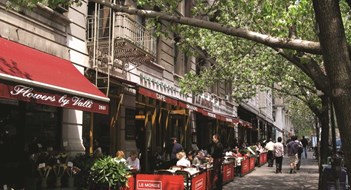
 As the old saying goes, you never get a second chance to make a first  impression, and for co-op and condo homebuyers, that first impression is almost  always the view from the street. No matter how deluxe the accommodations inside, if the property’s exterior is less than desirable, a buyer’s mind is often made up before they enter the front door—if they even bother to go that far. Read More

Papers, Please!

By Raanan Geberer

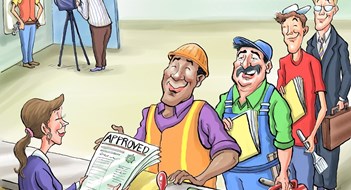
 Whether it is redesigning light fixtures in a common space or replacing a roof,  repair jobs and capital improvement projects are like death and taxes, they are  inevitable. Whereas a building administrator or a managing agent most often  handles the hiring of contractors and oversees the execution of the job,  problems and issues often arise which makes it important for board members to  understand licensing, documentation and accepted protocols. Read More

Don't Get Soaked

By Debra A. Estock

 It’s no secret these days that co-op and condo operating costs are going through  the roof, so to speak, and boards and managers are all looking for effective  ways to generate cost savings. Building management looks at fuel and energy  usage regularly, but one often-forgotten area is water usage. Doing a cost  analysis is a good way to determine if your metered building is paying its fair  share or is being overcharged by the utility company or a city agency. Read More

What's in Your Wallet?

By Elisa Drake

 Unless it's a thoughtful gift or a party in their honor, nobody likes surprises.  That's especially true when it comes to sudden, serious, or non-negotiable  repairs to a co-op or condo building. A building community must have enough  money saved to deal with major projects as they arise, or risk major financial  and structural troubles. But economic woes of residents such as unemployment or  default, or living on tight fixed incomes, means more HOAs are finding it  difficult to keep their reserves adequately funded. Read More

New York's Upper West Side

By Christy Smith-Sloman

 With its plethora of major cultural and educational institutions like Lincoln  Center, the Museum of Natural History, the Cathedral of St. John the Divine,  Grant’s Tomb, Barnard College, Union Theological Seminary and Columbia University, it’s easy to forget that the Upper West Side of Manhattan is primarily a  residential neighborhood. Block after block, you’ll find stately prewar architecture, opulent co-ops and condos and classic four  and five story residences sandwiched between lavish parks, luxury hotels,  sophisticated boutiques and haute cuisine restaurants.   Read More

A Concrete Solution in the Big Apple

By Jonathan Barnes

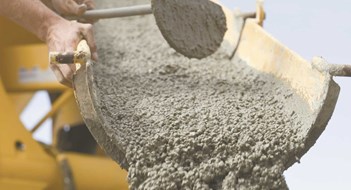
 Concrete is the most prevalent building material in existence today, though most  people probably don’t notice how widely used the material is until it begins to break up in front of  their homes, or falls off of their buildings, roads and bridges. Despite the  ubiquity of concrete, the questions of who has the expertise to do repairs on  concrete structures and how such repairs should be properly done weren’t being fully addressed even a few decades ago. Read More

Q&A: Sponsor Control over the Board

By Stanley M. Kaufman

I serve on the board of a Brooklyn co-op which is only 52 percent shareholder  owned. Shareholders now have the simple majority on the board. Our sponsor owns  the management company (which is non-responsive), has a relationship with our  CPA and we share his attorney. It makes many shareholders and board members  uncomfortable having the sponsor associated with every entity we depend on for  loyalty. What are the pros and cons of using a sponsor-owned management  company, a CPA with possible sponsor loyalties and an attorney who has worked  for the sponsor for decades?” Read More

Building Operations

On The Board

NYC Living

Newspaper subscription

subscribe Subscribe to "The Cooperator" newspaper - it is FREE. Manage my subscriptions

E-Mail Newsletter

Would you prefer receiving the summary of new articles by e-mail? Your E-Mail: