Finance

(Page 4 of 6)   « Prev  2  3  
4
  5  6  Next »

We've Got You Covered

By Barbara Dershowitz

One of the most important pieces of insurance coverage a co-op or condo building carries is its Read More

Financial Checks and Balances

By Barbara Dershowitz

Is a co-op or condo owner, protecting your building's financial stability is of paramount importance in Read More

Keeping Track of the Bottom Line

By Barbara Dershowitz

It's a typical scenario. The board and managing agent assemble for the regular monthly meeting. Things get lively and everyone participates. The group discusses staff issues, makes decisions about the tile color in the laundry room and directs management to post signs about hot water downtime. Then it's time for the monthly financial report, and a lull falls over the room. While the managing agent and treasurer launch into a discussion about year-to-date budgeted versus actual expenditures, several board membersuncomfortable with discussions involving calculations or financestune out. They flip absently through the pages of the monthly financial report to create the illusion of involvement; but, in reality, they're confused, and hopeful that the financial discussion won't last too long. Eventually the meeting moves on to a new topic and everyone is back in the loop again. Read More

The Evolution of the End Loan

By Barbara Dershowitz

Remember the early 1980s? Reagan was president, the national economy was strong, property values Read More

New Lending Options for Co-ops

By Stacey Cooper

In the first cold day of the season, a group of res- idents and politicians stood in front of the Read More

The New Co-op and Condo Tax Break Up Law

By Diana Mosher

Co-op shareholders and condo owners in New York City may not always agree on how the common areas Read More

Buyers Checklist

By Vicki Chesler

For most people, buying a home is the biggest investment they will ever make. But in order to make sure it Read More

Brokers & Bankers

By Charles Ciolino

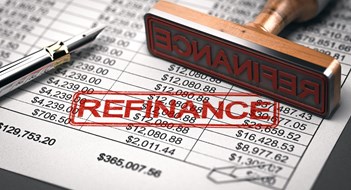
Nearly 100 percent of New York City co-ops have an underlying mortgage of anywhere from a few thousand dollars to millions of dollars. If you own a co-op, having an additional multi-million dollar mortgage hanging over your head might sound like an alarming prospect. You might be surprised to learn that while homeowners generally pay off their own mortgages in 30 years or less, very few co-ops have paid off their underlying mortgage. Because so few buildings have actually paid off their underlying mortgage, they are forced to refinance when the term of their current loan comes to an end. Co-op board members looking to refinance will then turn either to a mortgage broker or a mortgage banker (or lender) to lead them through the process and obtain the financing they need. Read More

Subletting Pros and Cons

By Rebekah Darcy Mulhare

The board of a co-op is required to perform an ongoing balancing act, weighing both the needs of the individual shareholders and the good of the whole. Nowhere is this more apparent than the controversial issue of subletting. While owners feel entitled to rent out their property as need dictates, the board must be concerned with the financial well-being of the building, questions of community, and quality of life. While a "no sublet" policy may create hardship for unit owners, too much undermines the building’s financial viability, establishing and enforcing a fair sublet policy can be crucial to keeping the peace. Read More

A Mortgage Primer

By Patrick B. Niland

To paraphrase Sy Syms, "an educated board member is a lender’s best borrower!" That concept underlies all of the articles I have written about co-op financing. Since my last article for The Cooperator ("Dial ‘M’ for Mortgage," December/January 1997), however, much has changed in the mortgage market. Refinancing an underlying mortgage is the most important decision that a board will make. This one decision will not only affect the monthly maintenance of every shareholder, but also the market value of every apartment in the building. It is a decision that warrants thorough planning, careful analysis, and diligent execution by every member of the board’s professional team. No board should attempt a refinancing on its own. It is absolutely essential that the board involve every one of its professional advisors in this critical decision from the very beginning. Read More

When Sponsors Don't Sell

By Robert Grant

Before 1989, during the height of the real estate market, shareholders were buying and selling apartments at an accelerated rate. But when the recession hit the market, between 1989 and 1993, co-op sponsors (holders of unsold shares) couldn’t sell their units and began renting them instead. As a result, shareholders felt trapped; they were tied to co-ops that because of the low percentage of owner-occupants, could no longer meet the standards necessary to obtain mortgage financing. Dara Gardens is one such property that was caught in this predicament. Read More

Analyzing Financials

By Neil Binder

There are countless war stories told by real estate brokers of deals that fell apart because the buyer felt that the building's financial statement contained negative information. There is no question that it is essential to review the financial information on a co-op corporation or condo association prior to buying. However, it is equally important to create reasonable criteria for making a good evaluation. All too frequently buyers analyze financial reports on co-ops and condos in the same manner they would any other financial investment, and this is fundamentally wrong. In any other economic investment the analyzer searches for economic opportunity to create greater profit; however, in purchasing a co-op or condo apartment, economic opportunity is not an element. Rather, the analysis is oriented to ascertaining ongoing stability. Read More

Cash-Strapped?

By Bernadette Marciniak

 Money is a topic some people are skittish about discussing. When you’re a board member or the managing agent of a residential co-op or condo building  however, there’s no benefit to skirting financial realities just because they may be difficult  or contentious—on the contrary, not talking openly and candidly about a building’s financial picture, or the need for a special assessment or fee increase can  have serious consequences for the entire community. Read More

Money in the Bank

By Liz Lent

 Perhaps one of the most difficult aspects of the recent recession was the sudden  evaporation of credit from major banks and lending institutions. The logic  behind it was understandable: too much easy credit had led, in part, to the  collapse that stunned the nation and then the world starting in 2008. Although  the New York housing market was less affected than that of other states such as  Florida and Nevada, it still felt the shifts. Among the repercussions was a new  set of regulations issued in February 2010 by the Federal Housing  Administration (FHA) which created a number of requirements for any building  that wished to accept FHA-backed mortgage loans.   Read More

Low Reserves and Defaults Challenge Boards

By Hillary Pember

 Even in the best of economic times, preparing a co-op or condo’s annual budget can be a tiresome task, fraught with uncertainty, estimations  and shifting numbers. Factor in one of the most harrowing economic downturns in  a century, with cash-strapped owners sometimes “skipping” their monthly maintenance fees—or even winding up in foreclosure—and you have a downright daunting task. Read More

Taking a Bite out of the Big Apple

By Greg Olear

In most cities, traditionally, the choicest pieces of real estate are owned by native sons and daughters, people who are from the area. Money comes in from everywhere, but the entrepreneurs making that money are homegrown. Heinz and Carnegie in Pittsburgh, Ford in Detroit, and more recently, Bill Gates in Seattle. Read More

It's Budget Time

By Stephanie Mannino

As every board member knows, a realistic budget is essential to the financial health of their co-op or condo. Creating a workable budget is not an easy task: while you can use the current year's budget as a jumping off point, many expenses must be estimated. Determining these numbers often feels like stepping into the unknown, as predicting expenses can prove difficult. Read More

Understanding Your Finances

By Lisa Iannucci

 For a crystal-clear picture of how a co-op board or condo association is doing,  there are few better lenses than the community's budgets and financial reports.  From an investment perspective, they show the association board, property  managers, the unit owners/shareholders and tenants whether the property is  solvent or not. If the numbers add up and monies coming in and out balance, you  can safely assume everyone is doing their job, and upholding their financial  and fiduciary duty to the community. If the property is in the red, it’s important to determine why that is, and what needs to be done differently to  turn the situation around and restore solvency. Read More

Planning for the Worst

By Keith Loria

 Tsunamis, earthquakes, tornadoes—these are just a few of the devastating disasters that have made headlines  already in 2011 and the emergency situations that resulted many never thought  possible.   Read More

Squeeze Play

By Jim Douglass

 Tighter lending requirements for Federal Housing Administration (FHA)-backed  mortgages for condos have put financial and administrative pressure on condos  all over the country at a time when many are ill prepared for any new  challenges. Read More

Shoring Up What Lies Beneath

By Greg Olear

 Not so very long ago, pretty much any individual or corporate entity could get a  loan quickly and easily, with only some cursory paperwork separating borrower  from lender. The so-called subprime mortgage crisis put a stop to all that, and  banks great and small suddenly threw on the brakes and heeded the advice of  Polonius: “Neither a borrower nor a lender be.” Read More

New Options for Co-ops

By Raanan Geberer

As many readers are by now aware, a rule that proved a hindrance to the operations of many co-ops in New York was drastically altered in December of last year--and the changes are having far-reaching effects on the city's co-op communities.

Read More

Beware of Red Flags

By Greg Olear

Consider the story of Dave. He was the treasurer for his co-op, and served the board for just over four years. Dave felt that he'd done a tremendous job—not that anyone ever noticed, much less bothered to thank him. Read More

Shopping Smart

By Lisa Iannucci

 The day-to-day costs of running a multifamily residential building are  significant. There’s the fuel oil, electric, cleaning supplies, equipment maintenance and service  calls for repair and upkeep. Then there are the insurance costs, landscaping,  trash removal, snow removal, advertising, property taxes, and maintenance fees. Read More

The Bottom Line

By Greg Olear

 Not everybody on a co-op or condo's board is an accountant (or can even balance  their own checkbook, for that matter.) Handling the money for an entire building is a big responsibility, however, and  residents rely upon their board to make good financial decisions on behalf of  the entire community and to protect its individual and collective assets. Read More

Struggling to Strike a Balance

By Raanan Geberer

 When you walk down many large commercial thoroughfares in New York, whether it’s Fifth or Madison Aevnue in Manhattan, Kings Highway in Brooklyn or Main Street  in Flushing, you’re sure to notice many more empty stores than usual—living proof of the current recession. You’ll see them on the side streets, too. Many of these stores are on the ground  floor of old rental apartment buildings or in one- or two-story “taxpayers.” But others are on the ground floors of condo and co-op buildings. Read More

What Your Board Should Know

By Stephanie Mannino

Co-op boards are notorious for scrutinizing potential shareholders. Condos, on the other hand, are often thought of as more lenient—and thus more desirable—by buyers because condo boards lack the power to probe too deeply into a buyer’s personal business. While this might be attractive to purchasers, it means the board has less control—and often little say—in who resides in their building. Read More

Look Out for Predatory Lending

By Denton Tarver

Cons and hustles are as old as civilization itself. For as long as there have been goods and currency to collect and divide, there have been unscrupulous individuals who are ready to relieve the unwary consumer of their holdings. Banking today is no different, but it doesn't mean consumers should operate with paranoia. A healthy dose of skepticism and a pocketful of questions can mean the difference between the perfect loan and the perfect scam. Read More

By the Book

By Steven Cutler

 Unless you have a degree in accounting, your first board meeting could come as a  bit of a shock. You probably knew board members oversee the finances of the  corporation, but who knew there were so many records to produce and filing  deadlines to meet? Read More

The Impact of Arrears

By Jonathan Barnes

 As the recession has lingered on since 2008, co-op and condo buildings  throughout the city—from luxurious downtown buildings to middle-income and lower-income walkups—have found more of their residents in arrears with their monthly fees. Some of  these people have lost jobs, and unemployment has forced them to prioritize  (and sometimes skip) their monthly bills. Credit cards and mortgage payments  often are paid first, followed by utilities and property taxes.   Read More

Fraud Alert

By Raanan Geberer

Given recent headlines, cooperative and condominium associations could be  forgiven for thinking they need to put an armed guard and razor wire around the  petty cash box. A wave of fraud appears to be hitting properties from New York  to Florida and beyond. Read More

Foreclosure Epidemic Skips Big Apple...So Far

By Keith Loria

Whether you own your own home or not, you can’t help but know about the subprime mortgage crisis that is sweeping across America as foreclosures are claiming people’s homes everywhere we look. Read More

What Happens When a Building Defaults?

By Lisa Iannucci

Hard as it is to imagine such doomsday scenarios in today's more-than-robust New York City housing market, the truth is that there are plenty of buildings throughout the five boroughs that could very well be in danger of defaulting on their financial obligations. Or buildings that have members whose financial troubles will come back to haunt the board if they're not adequately handled. Read More

Use it Or Lose it

By Raanan Geberer

During the real estate boom of the last decades, many new condo buildings used to  use extravagant amenities as a tool for new buyers. Marble-top counters,  exercise rooms, Jacuzzis, free cars for buyers, childrens' playrooms, computer  lounges with wireless Internet (before wireless became ubiquitous), wine  cellars and continental breakfasts were among those that were being offered.  This author has even heard of one development that offered an in-house art  gallery, and another that offered a basketball court. Read More

Paying Up

By Steven Cutler

 While news of defaults, liens, and other financial train-wrecks have dominated  the news and caused many building boards plenty of sleepless nights, co-ops  have been lucky. While a spike in defaults on maintenance payments over the  last three years has forced many condominium boards to scramble to make up for  lost income, legal and management professionals say that co-ops have survived  relatively unscathed. But why is that? Read More

(Page 4 of 6)   « Prev  2  3  
4
  5  6  Next »

Building Operations

On The Board

NYC Living

Newspaper subscription

subscribe Subscribe to "The Cooperator" newspaper - it is FREE. Manage my subscriptions

E-Mail Newsletter

Would you prefer receiving the summary of new articles by e-mail? Your E-Mail: