- Home
- Maintenance
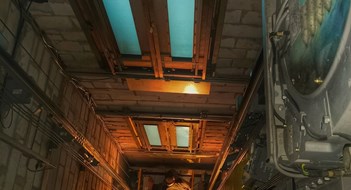
How Do You Know If Your Elevator is Safe?
Co-op boards are more likely to repair a leaking roof or paint the lobby than tackle an elevator that needs to be Read More
Capital Improvement Projects
It doesn't matter what type of building you live in or where it is located, eventually it will need some capital improvements. Read More
Security Do's & Don'ts
Following is a list of security do's and don'ts for both doorman and non-doorman buildings. Of course the first Read More
Reducing Water Costs
Management experts and others in the real estate industry are always cautioning their co-op Read More
Garbage Disposers
For most visitors to New York City, it is a mystery as to why garbage disposers (the popular term disposal Read More
Helping Conserve Energy
Many co-op and condo boards have realized that energy conservation is not only an issue of Read More
Heat Sensor Technology
It's the dead of winter. Outside the temperature is below freezing. Your building is sending up heat, and you've got Read More
Hidden Dangers:
A little over a year ago tennis star Vitas Gerulitas went to bed in a friend's pool house on Long Island and Read More
'Home Safe Home'
Every 11 seconds a burglary is committed in the United States, according to the Department of Justice's Read More
Regulating Boiler Repairs
You probably don't think about your building's boiler very often. As long as it provides heat and Read More
A Unique Source of Funding
In 1988 Mayor Ed Koch announced a new program that would give homeowners and multiple-dwelling buildings ten Read More
Getting the Lead Out
What do you know about lead-based paint? Perhaps you know that it's a toxin that's espe- Read More
Water Pressure in High Rises
What comes to mind when you think of water pressure? For most people these words Read More
Sidewalk Shed Safety
You are walking along the sidewalk and, as happens so frequently in New York, you approach a portion that Read More
Clean Chutes and Ducts
Michael Radomsky, on-site manager of a 16-unit prewar cooperative on Park Avenue, was Read More
Revolutionary Laundry Rooms
Forget the dark, dingy room with uncomfortable chairs and crummy machines. Never mind running down Read More
Y2K Seminar: Preparing Your Building For The Millennium
When the clock strikes 12 on January 1 of next year, what will happen? Many warn of impending chaos as microchips failing to recognize the date bring us back to the beginning of the century. If you're overwhelmed by Y2K gloom and doom, it might not be a good idea to close your eyes and ears to the frenzy just yet. It is essential for co-op and condo board members to plan and implement programs to ensure Y2K compliance for all building systems. Read More
Who is Responsible?
Imagine this. Your contractor has finally completed the renovations to your bathroom - taking three months rather than the three weeks he promised. The wallpaper, special order wall and flooring tile match perfectly, and although you exceeded your budget, you are very pleased with the results. You leave for a trip and upon returning to your building, you are told by your doorman about the "big flood" in your apartment and how lucky you are to have been away. Filled with anxiety, you rush to your apartment and look in horror at your bathroom. The flood is gone and, essentially, so is your wallpaper and tiling which have been destroyed during the repair of the pipes in the wall. You call the managing agent of the building to ascertain what happened and to confirm that the building will completely restore your formerly beautiful bathroom. You are told it will not. You then call your insurance agent to notify him or her of the damage and to file a claim. Finally, you call your travel agent to book the next flight out of town to avoid dealing with the problem. Read More
Cover Story: Where Does All the Garbage Go?
There was a time not long ago when New Yorkers could throw just about anything away and not give it a second thought. But in the late 1980s, the federal government enacted strong environmental legislation, including the closure of many landfills because they didn't comply with federal standards. These occurrences, combined with New York City's ban on incinerators in residential buildings, set the stage for Mayor Koch to sign Local Law 19 of 1989. This ushered in the Age of Recycling for residential buildings, changing forever how we dispose of our trash. Read More
Your Building's Superintendent
If you had to name the single most valuable individual to your co-op or condo, who would it be? Certainly, your board president, managing agent, corporate counsel and accountant are key players. But boards and residents should never underestimate the importance of a competent, conscientious superintendent. The condition of your building's mechanical systems, how well maintained its public areas are and even aspects of its financial condition can all be traced to how well your superintendent performs. Knowing how to gauge your super's performance and how to improve it for the future will go a long way toward making your property the best it can be. Read More
Covering Your Bases
Warranties for products are simple to understand, most people might think. You
go to the store, buy a computer or a DVD player or a TV, or even a larger
appliance like a refrigerator, and you get a piece of paper describing a
one-year or two-year warranty, and what’s covered. Sometimes, for some extra money, you can get an extended warranty for
another year or so.
Read More
Make Connections at the 2012 Expo
As a co-op or condominium board member, you rely on a long list of service
professionals for work ranging from HVAC maintenance to parking lot sealing.
Finding the right person for the right job, though, can be a challenge.
Read More
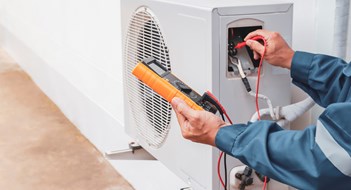
Breathing Easy
As winter approaches, it will soon be time to batten down the hatches so the
warm air stays in and the cold air stays out. Keeping indoor air clean is
critical to maintaining a healthy environment. The inner workings of a building’s operating system is often a mystery to the untrained person or board member.
What exists in the seemingly endless caverns of a building’s HVAC system, for example, can be surprising—from dead rodents and insects to various forms of dangerous mold.
Read More
Precious Metals
When most of us think of New York City architecture, skyscrapers and brownstones
are probably what spring to mind most readily—but there's a lot more to New York City's beautiful buildings than just
plate-glass and bricks. The city is home to thousands of examples of decorative exterior metalwork, from ornate grates and gates to fences,
balconies, and railings.
Read More
The Cooperator's 24th Annual Co-op and Condo Expo
Good information and clear communication are crucial for anyone involved with the administration of a cooperative, condominium or homeowners association—crucial not just to thriving, but surviving in today's challenging economic times. Finding that information and developing communication strategies isn't always easy, however. Read MoreFeeling the Heat
Even cavemen knew that fire was dangerous—and they lived in flame-proof caves. But here in the 21st century, people
blithely build roaring fires right in the middle of their furnished,
wood-filled, carpeted, upholstered and bookcase-jammed condominiums. And they
want someone to tell them it’s safe.
Read More
Through the Looking Glass
Doing a major window replacement or repair project in a building that’s home to hundreds of people isn’t easy. There are any number of scheduling and access considerations, and time
is obviously of the essence, as it’s impractical and unsafe to leave a gaping hole in someone’s wall for any length of time.
Read More
Prioritizing Projects to Avoid Trouble Later
With the economy still in the weeds and building administrators looking for
creative ways to save money and build up their bottom line, it’s no surprise to hear that co-ops and condos are taking a hard look at their
maintenance and building improvement wish lists and making some tough
decisions. They’re reassessing which projects they can afford to undertake and which ones they
need to put off until later.
Read More
Positive Impacts of Local Law 11
There’s more than enough to worry about living in a major American city without having
to worry about being conked on the head by falling debris. That’s the kind of urban hazard Local Law 11 was created to address, requiring all
buildings more than six stories in height—including co-ops, condos, hospitals, and commercial buildings—to conduct regular inspections of their exterior facades.
Read More
Intelligent Buildings Technology
Technological applications to residential building life are becoming more prevalent, and in some cases, they’ve even become more affordable than in the past. An “intelligent” building is able to monitor its environmental, mechanical, and lighting (among other) systems, through a computerized network of electronic devices. Maintenance, communications, security, and other residential building functions are now being handled by these new systems, whose upgraded operations are helping building personnel do their jobs more effectively. Read More
Urban Landscaping Tips from the Pros
You've got to hand it to city plants. They squeeze themselves into the tightest of spaces, and each day they battle pollution and smog, get stepped on (or worse, thanks to the city's dog owners) more times than they'd like to count. In short, they're a lot like us—and like us, they need a certain amount of care and tending in order to thrive in the concrete jungle. Read More
Restoring Buildings After Emergencies
Apartment buildings, whether cooperatives or condos, are inherently fragile. When that many units share the same plot of land, and the same walls, the same floors, the same elevators and stairways, standpipes and boilers, lobbies and roofs, disasters—whether broken water pipes or the tragic in the case of decomposing bodies, fatal fires or building explosions—have the potential to spread quickly. Thus, when something nasty befalls a building, the first order of business is to contain the problem. Read More
Good Light and No Sounds
Few things matter more to a co-op or condo owner than living in a place with good light and a good view. That's why windows serve as one of the biggest selling points and most important physical aspects of a building. The right windows can give a building panache and style and, most of all, the light and look that today's homeowners crave. Read More
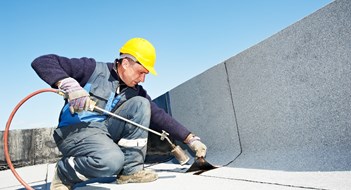
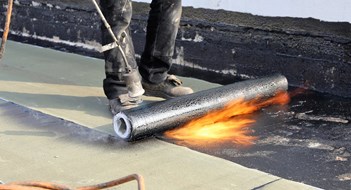
Keeping the Rain Off
After the four walls of a given structure, the roof is sometimes referred to as
the “fifth plane”—and just like the walls that hold it up, the roof is an all-important structure
that can make or break a building’s performance. The tri-state area’s changeable climate—which as we all know ranges from sweltering hot and humid summer heat to
bone-chilling cold in the winter months—often exacerbates trouble spots. If not properly maintained, even a minor roof
problem can lead to costly repairs.
Read More