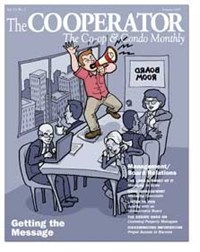

Manage This
Property managers have a lot to keep track of - board and shareholder meetings, maintenance issues, and a host of other concerns that go along with managing a building - or in some cases several buildings - in a metropolitan area like New York City. Depending on the size of the management company and the number of properties in their management portfolio, a single agent often has multiple properties to take care of. That can have as many advantages as it does disadvantages. Read More
Way Uptown
They say you can have it all in New York City, but sometimes that's a tough proposition: You want to live in Manhattan, but you want your home to be an idyllic retreat. You're looking for an affordable co-op, but you think it should be spacious. You want to live minutes from downtown, but you want to have woods nearby! Most New Yorkers would laugh you out of the room if you voiced this wish list out loud. But they obviously don't know about Manhattan's best kept secret"¦Inwood. Read More
The Long and Short of It
Every co-op or condo community in New York City has its own personality and character, from the tiny 20-unit brownstone co-ops of the West Village to the towering modern high-rises of the Upper East Side. The wide range of sizes, demographics, expectations, and overall building personalities poses a special challenge to managing agents, whose portfolios might include both a 20-unit prewar and a 200-unit high-rise. Read More
Avoiding Management Mistakes
Mistakes happen - they're part of everybody's learning curve. There are plenty of opportunities to make mistakes in the course of running a residential building; in nearly three decades in the building operations field, I've both made and been witness to quite a few of them myself. The trick, however, is to minimize the impact of our mistakes and make sure we don't make the same one more than once. Below you'll find a short list of some of the mistakes I've seen happen again and again in buildings all over the city, along with tips on how to avoid such problems in your own building community. Read More
Disseminating Information
There's a lot of paperwork that's involved in running a co-op or condo building - everything from financial records to legal documents, shareholder correspondence and management statements from board meetings - and it's important that the documents are available to the board and shareholders when needed. While it's up to the managing agent to keep this material organized and secure, sometimes copies of the paperwork can also be found in the co-op office itself. Read More
The Debate Goes On
Six years ago, a scandal rocked the New York State real estate management industry for the second time in a decade. Thirty management company owners, agents and contractors were indicted for taking kickbacks for contract work at many New York City co-ops and condo buildings. Read More
Listen to This!
Just as the world is populated with both good and bad people, New York City is populated by some excellently run and well-organized co-op and condo boards, and some not so efficient. Making unpopular decisions doesn't necessarily mean a board is incompetent - virtually every decision made is going to have its detractors - but making popular decisions just to avoid controversy may not be in the best interests of the shareholders and the cooperative corporation either. Read More