
2008 Feb


2008 Feb Vol. 28, No. 2

Focus on...Board/Shareholder Relations

Attending the Annual Shareholder Meeting

By Domini Hedderman

Most shareholders would agree that attending their annual meeting is an activity low on their priority list, right after flossing their teeth and organizing their sock drawers. Some feel the meetings are boring, while others feel they don't need to be there as long as their building is running smoothly. Others simply just don't care. Read More

New Legislation Changes the Game

By Hannah Fons

For decades, co-op boards and managers have had to walk a delicate line between generating revenue and obeying the law when it came to renting out space in their buildings to commercial tenants. Read More

A Look at Archaic Bylaws

By Keith Loria

On a classic episode of the TV show The Simpsons, the town read its founding charter only to discover that the mayor of Springfield was supposed to get two pigs every year. Read More

The Spirit of Being Neighborly

By Lisa Iannucci

Lady Bird Johnson once said, "While the spirit of neighborliness was important on the frontier because neighbors were so few, it is even more important now because our neighbors are so many." Read More

Stop, Drop and Breathe

By Mary K. Fons

Whether it's demanding residents or unreasonable board members, maintenance headaches or a barely-under-control work schedule, a property manager is in a unique—and uniquely stressful—position. No one knows this better than the property managers themselves. What might surprise the managers, however, is that of all the items listed above, taking care of their own mental health and learning proper stress-deflation methods ought to be a priority as well. Read More

How Boards Deal with Late Payments

By Greg Olear

Monthly charges, including common charges, emergency repairs, lawsuits, assessments, maintenance fees, dues and so forth, are a big part of owning a co-op or condo in New York City. When an owner is late, or misses monthly payments entirely, it affects the whole building and can adversely impact the entire community. There is less revenue that month, so savings may have to be raided. Property managers have to spend time better invested elsewhere dealing with the problem. Legal fees mount. And so on. Read More

Deploy the Welcome Wagon

By Lisa Buscani

Fifty years ago, residents new to a neighborhood might be greeted by a Welcome Wagon hostess in an A-line skirt and perfect matte lipstick bearing a basket full of goodies from local merchants. She'd give the homeowners the lowdown on who's who, what's what and leave the new neighbors with the warm and fuzzy feeling that their new community, especially the local merchants, really cared. Read More

Rules and Problems

By Stephanie Mannino

Although many co-ops and condos in New York City might not like it, shareholders and unit owners often rent out their apartments to subletters. Board control over subletting can vary—from stringent in most co-ops, to giving the board the first right of refusal in condos. But sometimes, residents try to sidestep the board and allow a subletter to move in. And even with board approval, having a renter, or several renters, in the building could pose problems. Read More

Passing the Pest Test

By Denton Tarver

Few things inspire more disgust in an apartment owner than an infestation, be it bugs, rodents, or other vermin. Unfortunately, pests are often part-and-parcel of life in a sprawling metropolitan area. Roaches, mice, rats, ants, bedbugs and the occasional invasion of centipedes are some of the more common unwelcome "guests" in New York City buildings. Read More

Recycling Program for Apartment Buildings

By Hannah Fons

Everybody knows that New York City's apartment buildings generate a whole lot of trash. In fact, according to the New York Department of Sanitation (DSNY), the average New York City resident discards nearly four and a half pounds of waste each day, or more than three-quarters of a ton per year. Multiply that by the number of residents in your building, and the sheer volume of waste gets pretty staggering. Read More

Cutting Down on Attorney Costs

By Anthony Stoeckert

Condo and co-op boards are always looking for ways to save money and one area where some cost-cutting opportunities might be found is in your legal bills. Your building's attorney likely performs many different types of services, works different hours every month and charges a significant hourly rate. With so many factors at play, attorneys who represent HOA boards have suggestions as to where those opportunities for savings exist. Read More

Cross-Roads Village to a Modern Suburbia

By Keith Loria

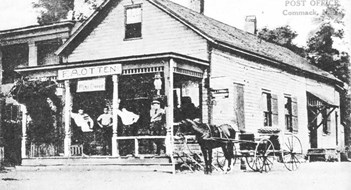
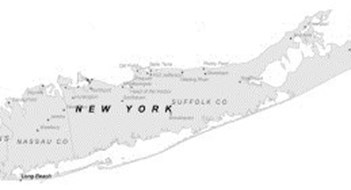
Back in 1900, a little village sprouted up on Long Island called "Comac" along the Huntington/Smithtown town line. Located in the little hollow created by the gently rolling hills that surrounded the intersection of Jericho Turnpike and the Commack/Townline Road, it was a cross-roads community that stretched out to the north, south east and west from Comac Corners. Read More

Neighbors Helping Neighbors

By Jonathan Barnes

Condominiums can provide all of the advantages of traditional homes, as well as affording other benefits such as recreational facilities, group activities and close proximity to shopping and other destination points. But the quasi-municipal nature of a condominium community means that elected representatives and property managers can have a myriad of issues to deal with in managing the neighborhood. This often amounts to amateurs dealing with decisions that a professional might handle better. Even among professional property management companies, some managers are more educated in the industry and more actively involved in their communities than others. Read More

Sex, Lies and Videotape?

By Jeffrey S. Reich, Esq. and Steven D. Sladkus, Esq.

As lawyers for many of Manhattan's cooperative and condominium boards, we often advise clients on issues that go far beyond proprietary leases and bylaws. Boards are frequently faced with situations ranging from fiery domestic disputes to embezzlement. Thus, we find ourselves providing legal advice on—as we call it—the "Law of the Jungle." A few memorable examples involve marital discord, criminal investigations, drugs and even firearms. Read More

Limitation of Liability Clauses

By C. Jaye Berger, Esq.

Everyone knows that building construction and renovation work can be difficult and dangerous and that lawsuits are not unusual. While most lawsuits involve the contractor on the project, there can certainly be lawsuits against the design professionals working on the project for an error or an omission in the design or in the provision of their services. There may be a claim that the work was not adequately or properly observed and that this resulted in problems with the work that the co-op or condominium was not aware of. Having insurance to cover such risks is essential, but that is not the end of the story. There are many instances where there may not be any insurance coverage for a variety of reasons—someone "forgot" to buy it; it was cancelled and nothing was done about it; the carrier received late notice of the claim and is declining coverage or the policy does not cover the hazard or type of work involved in the lawsuit. There also may be instances where there is insurance in place, but there is no defense of the claim offered by the carrier. Thus, while having insurance is important, there will still be certain claims that may need to be "defended" by the design firm or individual owner of that firm. Read More

Q&A: Corporate Conflicts?

By Martin Kera

Can a designated trustee of a co-op apartment serve as a member of a co-op board  in any role?  Read More

Q&A: Escrow Account

By Stewart E. Wurtzel

 I’m a condo owner in New York City. I have written to the management company of  our condo regarding some issues I have been having, but the management company  has not taken any action to remedy the situation. I would like to make my  maintenance payment into an escrow account until the issue is resolved or until  the management company starts to attempt to remedy the situation. My question  is, can I just set up an escrow account?   Read More

Q&A: In the Swim

By Michael Manzi

 I am president of a co-op, which has a swimming pool. The question has come up  as to whether or not a lifeguard is required by law. I am writing because I  found an article on the Internet on cooperator.com found at  (cooperator.com/articles/534/1/ Swimming-Pool-Management/ Page1.html), which  says that “New York City law requires that a lifeguard be present during all hours of pool  operation.” I am trying to find out about that law as one of our shareholders is insisting  that as a private entity we do not require a lifeguard.  Read More

From Start to Finish

By Bob Pirro

Whether you are looking out over New York City from New Jersey or looking out from New York City towards New Jersey or Long Island, the skyline is lined with high-rise cooperatives and condominiums—the majority of which are now close to 30 years old. Subject to the harsh environmental conditions common along the coast, age, natural wear-and-tear and lack of maintenance, co-op and condo boards are now faced with upgrading and repairing their plaza decks. Read More

Ways to Achieve Resident Retention

By Edward Andron, ARM, RAM

Providing creative ways to show your residents that you appreciate their loyalty will prove to be a wise investment that will help increase resident retention and pay dividends in both public and owner relations. Read More

Building Community Through Communication

By Ronald L. Perl

The "mortar" that cements together the building blocks for community is communication between homeowners and the leadership team. The following types of communication are extremely important: (a) member surveys—both written and via focus groups; (b) annual meetings; (c) town hall meetings / mid-year report-back to owners (you should receive and encourage owner input); (d) service requests/complaints—use a review and response procedure; (e) community activities, such as National "Night Out"; (f) block parties or holiday parties. Read More

Building Operations

On The Board

NYC Living

Newspaper subscription

subscribe Subscribe to "The Cooperator" newspaper - it is FREE. Manage my subscriptions

E-Mail Newsletter

Would you prefer receiving the summary of new articles by e-mail? Your E-Mail: