
2008 Sept


2008 September Vol. 28, No. 9


Focus on...Energy & The Enivironment

Citywide Green Initiatives

By Raanan Geberer

New York City officially became a leader of “green” initiatives when Mayor Michael R. Bloomberg announced his “PlaNYC 2030” initiative in 2007, although many elements of this omnibus serious of measures were public policy in the city well before it. Read More

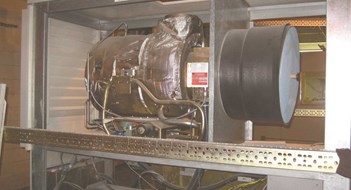
Leading More Buildings to Co-Generate

By Jonathan Barnes

The energy crisis of the 1970s created long lines of cars, with drivers waiting to fuel up at gas stations. These days, increasing fuel demands and rising prices are forcing the cost of everything from groceries to construction materials and other everyday expenditures ever upward. Heavy demand on the overtaxed utility grid has resulted in periodic blackouts in some major cities during summer months. Since utility costs comprise part of a building’s maintenance budget, maintenance costs for residential buildings also have been affected. Read More

A Look at Energy Cost Savings Strategies

By Keith Loria

By now, we’ve all heard about rising oil prices—and are seeing their impact on our energy bills. Co-op and condo owners in New York have seen their energy bills climb to record highs and there’s no relief in sight, so buildings and their owners are looking for ways to lower their energy bills. Read More

Buildings Go Green for Savings and More

By Raphael Kohan

We all know that famous anatomical ditty: “The head bone’s connected to the neck bone”—and so on. ( I imagine that those indelible lyrics have pulled more than a few aspiring doctors through their biology exams). But when it comes to co-op and condo buildings, there’s no such song to educate board members about the physical skeleton of their building structures. Perhaps there should be. Read More

Making the Case for Eco-Friendly Living

By Liz Lent

Change is good, as the saying goes. And it’s even better when that change both saves money and helps the environment. Sometimes, though, change can be difficult. That’s especially true when it affects the places we live and possibly impacts our wallets. This is why residents can be a bit reluctant when their board or management announces a shift to greener living, a change that inevitably will help save energy and improve living conditions but may also cost a few dollars to get the ball rolling. Read More

Keeping Buildings Dry

By William J. Pyznar, P.E.

Building owners are charged with the constant battle of keeping water out of the building envelope, but sometimes the water that causes stains, mold and decay comes from within the building envelope. Consideration to design, materials and use must be given during initial construction and reconstruction projects. Read More

Without Breaking the Bank

By Jonathan J. Levin

Looking to save the planet—or just a few bucks—more and more New Yorkers are looking to “green” their lifestyles. Environmental watchdogs are quick to point fingers at gas guzzling automobiles as prime contributors to climate change, but according to the U.S. Energy Research and Development Administration, residential buildings account for 21 percent of all carbon emissions in the United States. That makes housing almost as big a culprit as transportation, which surprisingly generates only about 27 percent of the country’s harmful emissions. Read More

Understanding What You Use Helps to Conserve

By Sharon Brind

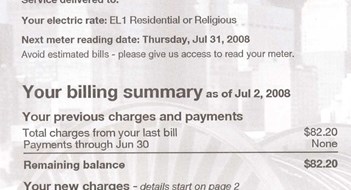
With the constant rise in energy costs, the use of “peak generating plants” and increased individual energy consumption, we are seeing a direct impact on our monthly electricity bill. According to Con Ed, July 2008 set a new record of 6.7 billion kilowatt hours, or approximately 350 kWh hours per customer. Going forward it will cost more and more to light, heat, cool, and live in our homes. What can we do to lower our bill, become more energy efficient in our homes and essentially become more “green”? Read More

Barking Up the Wrong Tree

By Bob Friedrich

The City Council is at it again with another attempt to create havoc for our co-ops. Intro 13, sponsored by Councilman Tony Avella is artfully crafted to conceal its true objective: Prohibit the right of co-ops and condos to control pet ownership in their buildings. When will council members realize that co-ops and condos are governed by boards of directors that are freely and fairly elected by those living in their communities and are empowered to set policies and house rules in order to create a meaningful quality of life for the hundreds if not thousands who live there? I know because I am the President of Glen Oaks Village, New York’s largest garden apartment co-op with 10,000 residents. Deciding whether to allow pets or not is fraught with many considerations and is best left to those living in their co-ops. Read More

Confessions of a Co-op/Condo Attorney

By Jeffrey S. Reich, Esq. and Steven D. Sladkus, Esq.

While previous columns focused on numerous outrageous situations that have faced us during our more than 25 years of collective service to our cooperative and condominium clients, one case sticks out in our minds. Incredibly, one case morphed from a simple proprietary lease default action into five federal court lawsuits and an adjudication of contempt of court. As will be seen, while courts tend to bend over backwards to accommodate pro se litigants (those who choose to represent themselves instead of retaining counsel), this pro se litigant took things way too far.

Read More

Aiming to Make All Buildings 'Green'

By Stephanie Mannino

It seems that nearly everything is going “green” these days. Whether it’s the special green issue of a popular consumer magazine, an advertisement for a fuel-efficient hybrid car or a push toward environmentally friendly building materials, the message is clear: green is here to stay. But the idea of green building is not new—it’s been the primary mission of the U.S. Green Buildings Council (USGBC) since the organization’s founding in 1993. Read More

A Look at Buildings and Energy Use

By Greg Olear

The concept of a “carbon footprint” has been widely circulated in the media for the last couple of years—particularly as global warming has become such an urgent topic of discussion for people other than Al Gore. Essentially, a carbon footprint is a representation of the total carbon emissions for a given person, organization, building, or operation. Read More

Dealing with Difficult Board Members

By Lisa Iannucci

On last season’s “The Apprentice” reality show, celebrities volunteered their time to team up and compete, not for a job with the Donald Trump organization, but to win a large donation to their favorite charity. The show’s concept is to win tasks and prevent hearing the infamous words, “You’re Fired!” from Donald Trump. Read More

Skid Row to Luxury Gold?

By Brendan Flaherty

Examining a few pounds of freeze-dried goji berries in the Bowery neighborhood’s Whole Foods market, it is easy to forget that you might be standing in the exact spot where the Bowery Boys, clad terrifyingly in stovepipe hats and flared trousers, clashed with rival gang, the Dead Rabbits. You snag a smidgeon of organic goat cheese and stroll up the Bowery, completely unaware that in a different time you might have been stepping over Bowery bums stumbling out of McGurk’s Suicide Hall. And passing the New Museum of Contemporary Art with a parasol slung over your shoulder, you can scarcely hear the piercing electric echoes of CBGB, a launching pad for American punk rock and bands like the Ramones, Blondie, and the Talking Heads. Read More

What you Should Know

By Adelaide Polsinelli

Having sat on a board for almost ten years, I continue to be astonished at how little most volunteers know about what the job entails. While it is important to volunteer your time for this position, there are things you must know in advance in order to prepare for what is ahead. Read More

Q&A: Running a Business in a Co-op

By Mark L. Hankin

I am a shareholder in a Westchester County 73-unit cooperative, two of which are commercial units generating approximately two percent of the co-op’s income. The president of our five-member board of directors has been president for over eighteen years. Several years ago he became a realtor and since that time has been a very active agent in both our community and in our co-op. This past year he purchased one of the two commercial spaces to open a real estate office that will be paying only the regular shareholder rate as its maintenance. Read More

Q&A: Can the Board Set a Minimum Sales Price?

By Andrew B. Freedland, Esq.

I recently received a memo from the board of directors of my co-op in Queens Village, stating that the building will not allow cooperators to sell their apartments below a sales price that they determine. Is this legal? Read More

Q&A: Dealing with a Noisy Neighbor

By Richard T. Walsh, Esq.

I have a neighbor whose door is just across from mine and whenever she enters her apartment, she closes her door with a very loud bang. Sometimes, I am asleep and I wake up and can’t go back to sleep. This has been going on for years and years. I talked to her about it, begged, cried, and shouted but to no avail. Sometimes she remembers and no sound, but 90 percent of the time the noise persists. What can I do short of writing to the board? This is a condo building and both of us are renters.

Read More

Building Operations

On The Board

NYC Living

Newspaper subscription

subscribe Subscribe to "The Cooperator" newspaper - it is FREE. Manage my subscriptions

E-Mail Newsletter

Would you prefer receiving the summary of new articles by e-mail? Your E-Mail:

Poll